
A parked vehicle with its engine running is not automatically wasting fuel. In Saudi fleet operations, cabin cooling, refrigeration or equipment power may be part of the job. Treating every stationary engine minute as a problem can push staff toward a fuel target that conflicts with safe and reasonable working conditions.
The useful question is which idling serves a necessary purpose and which can be reduced. Start with a clear definition based on your vehicles and work. Explain the distinction to drivers and supervisors. A practical programme protects essential cooling and authorized equipment use while addressing preventable waiting, poor scheduling or unattended operation where your procedures allow it.
Define what counts as avoidable
Define idle time using the data available from the vehicle and device. A location-based stopped status is not necessarily an engine-on measurement. Check engine-state support, reporting gaps and how the system handles PTO or auxiliary equipment. Document exclusions and uncertainty so a dashboard total does not silently combine several different operating conditions.
Group records by comparable work: urban deliveries, long-distance transport, depot activity or equipment operation. Include season and shift conditions where relevant. Necessary cooling on a hot afternoon is not directly comparable with a different vehicle operating under milder conditions. Ask drivers and site supervisors to help identify why the engine was running before categorizing the event.
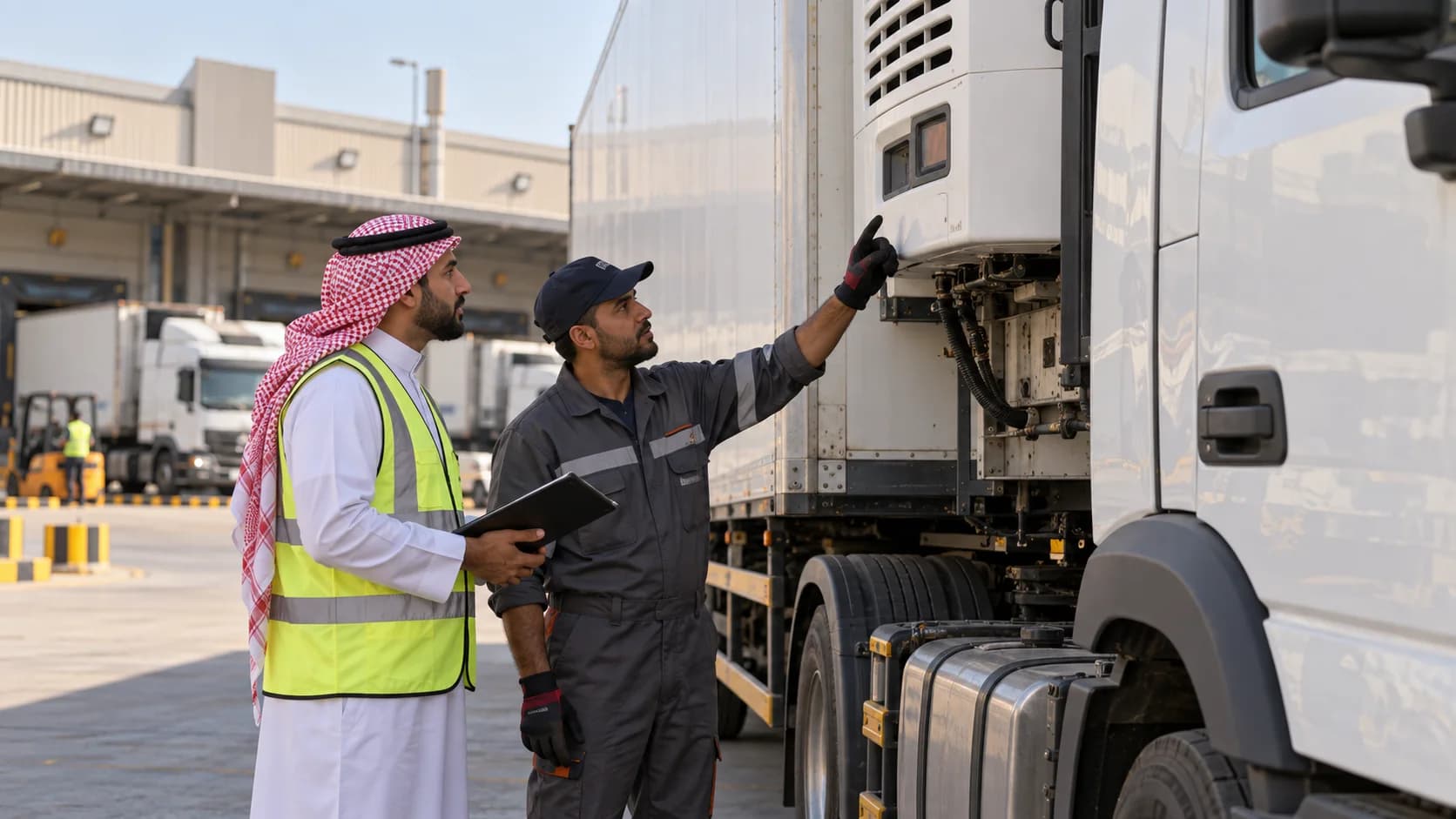
Build a baseline for similar work
Build a baseline over a representative period rather than one unusually quiet day. Record stationary engine-on time, driving activity, job count and the causes you can identify. Separate explained operational use from avoidable or unresolved time. The unresolved category matters: missing context is not evidence that the driver could safely have switched off.
Examine where avoidable time accumulates. An illustrative distribution depot might show repeated waiting between vehicle arrival and loading readiness. The first intervention could be a better dispatch release time, not a warning sent to every driver. Look for shared bottlenecks such as queues, unclear loading instructions or assignments issued before the site can receive the vehicle.
Choose a safe operational change
Agree safe changes with the responsible team. Options may include better appointments, ready-to-load checks or suitable waiting arrangements. Any engine-off instruction must account for equipment needs, vehicle guidance, heat exposure and an appropriate place for the driver. A fuel dashboard is not a substitute for a safe workplace procedure or a qualified equipment assessment.
Train supervisors to recognize exceptions and drivers to report them without penalty for legitimate use. Keep the policy practical enough to follow during a busy shift. Avoid setting an arbitrary fleet-wide limit that ignores duty cycle. If a change would require technical equipment or new facilities, assess its suitability and total cost before claiming it will save money.

Measure the result without overstating it
Measure the same groups and definitions after the change. Check that idle time was not merely reclassified and that delays or discomfort did not increase. Compare similar work and record relevant differences. Report the observed change as an operational result, separating it from claims about crashes, emissions or savings that were not actually measured.
For an illustrative calculation, a verified reduction of 20 avoidable engine hours at an observed average of 2 litres per hour represents about 40 litres. Multiply that by your documented unit fuel price to estimate fuel cost. The assumed rate is not a universal engine value, and the result excludes any implementation cost. Use your own measured data for a business decision.
When discussing idle reporting in AlphaFleet, ask how operational use, exceptions and data limitations can be understood for your devices. Begin with one avoidable cause and one safe change. A modest, verified improvement that staff can sustain is more valuable than a large theoretical saving based on turning off every parked vehicle.