Loading
Fuel loss
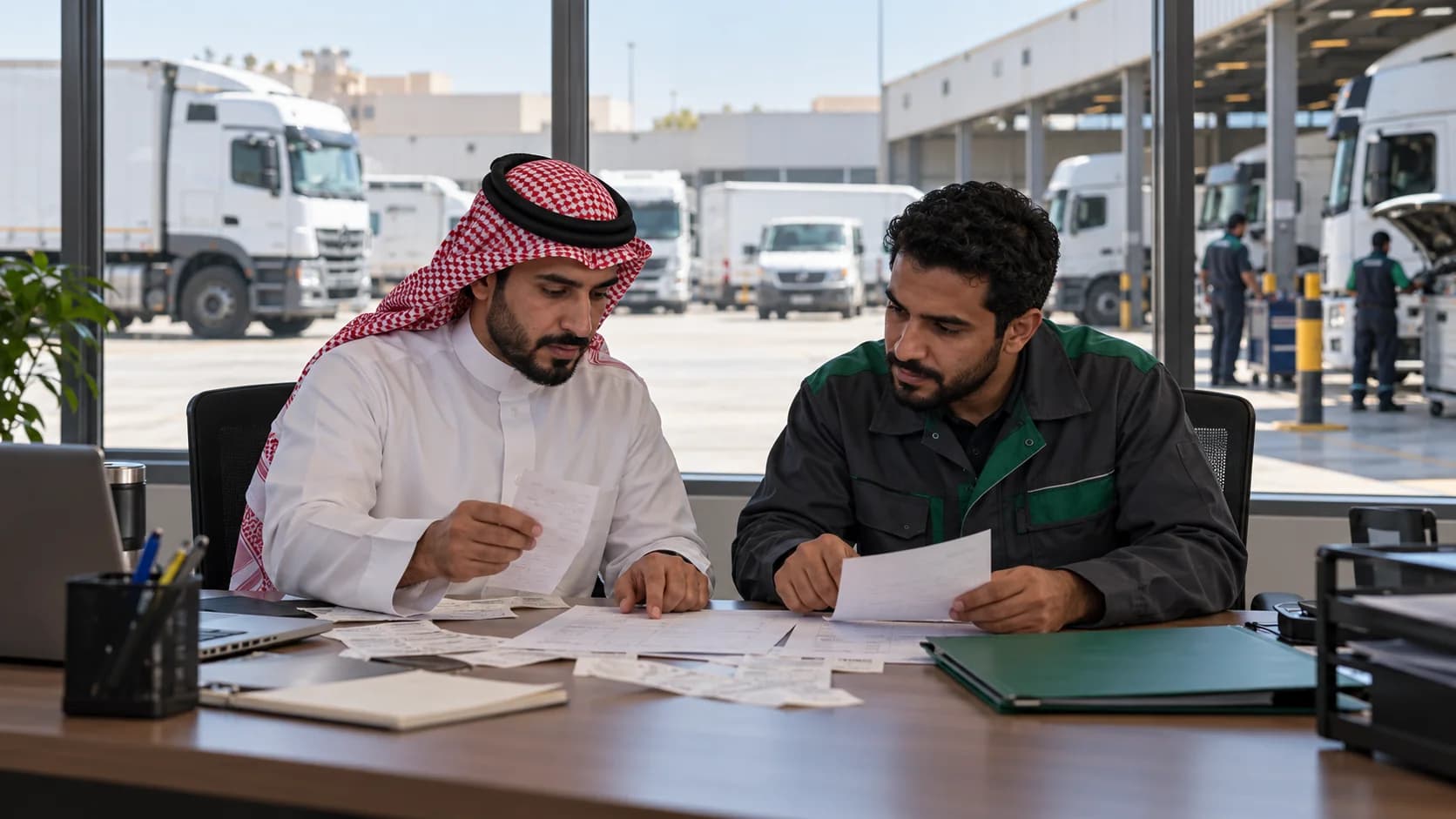
Check fuel discrepancies before making an accusation.
Compare the purchase, tank reading and journey.
Flag unusual fills or tank changes for review where provider data and compatible sensors are available. A discrepancy is a lead for investigation, not proof of fraud.
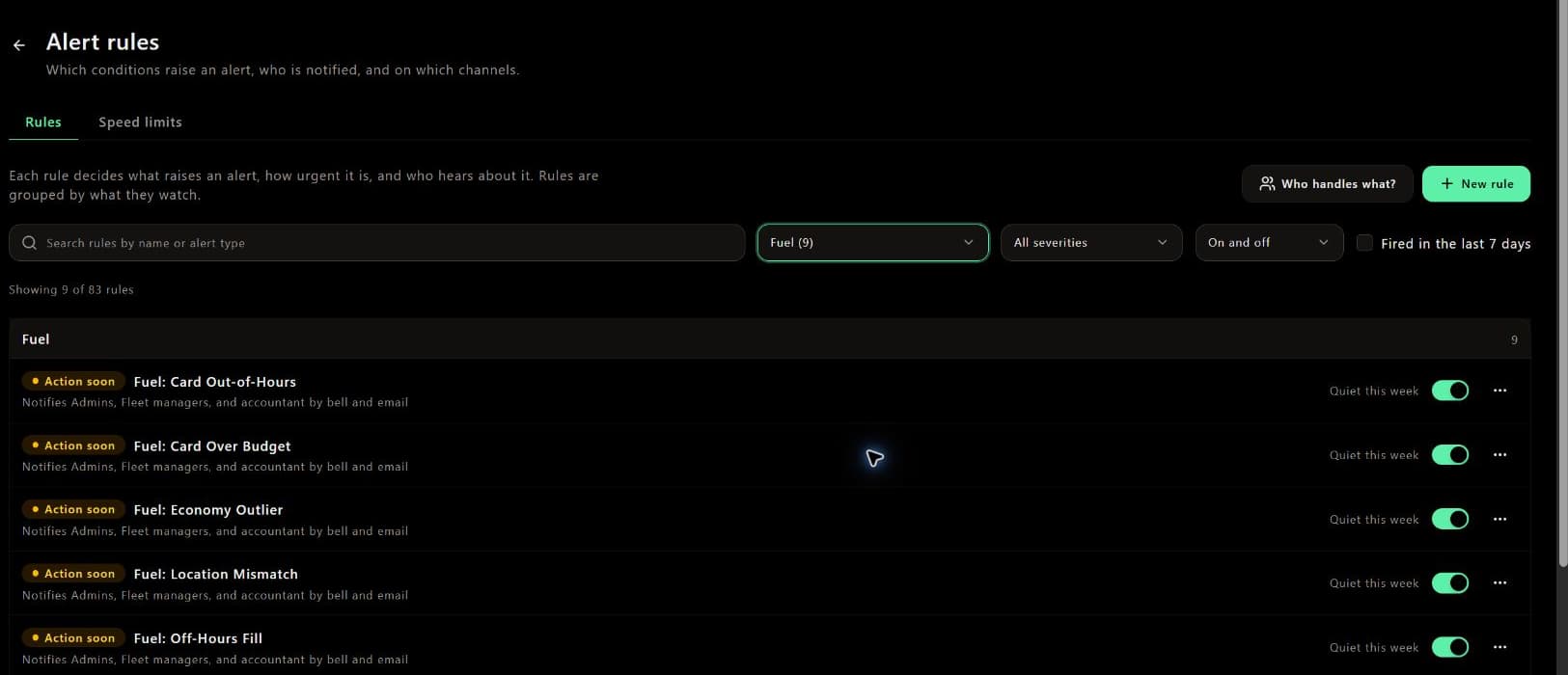
The receipt and the tank tell different parts of the story.
Measurement
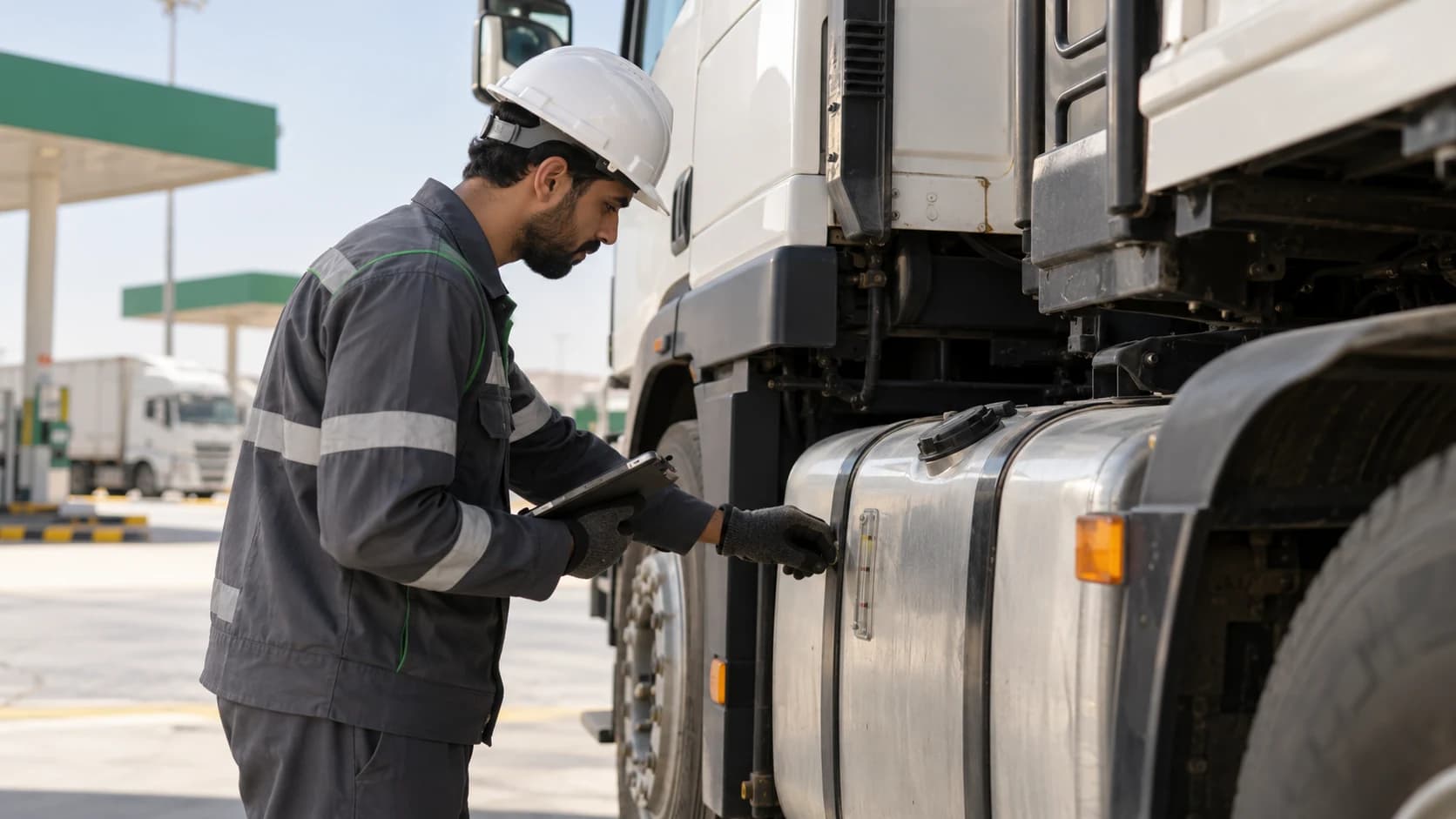
Check the measured tank level first.
Measure the tank level directly instead of estimating fuel use. This gives you a real reading before and after each fill.
- Monitor tank level continuously.
- Compare tank levels before and after refuelling.
- Focus extra controls on the vehicles with the highest fuel risk.
Matching
Bring the transaction and tank reading together.
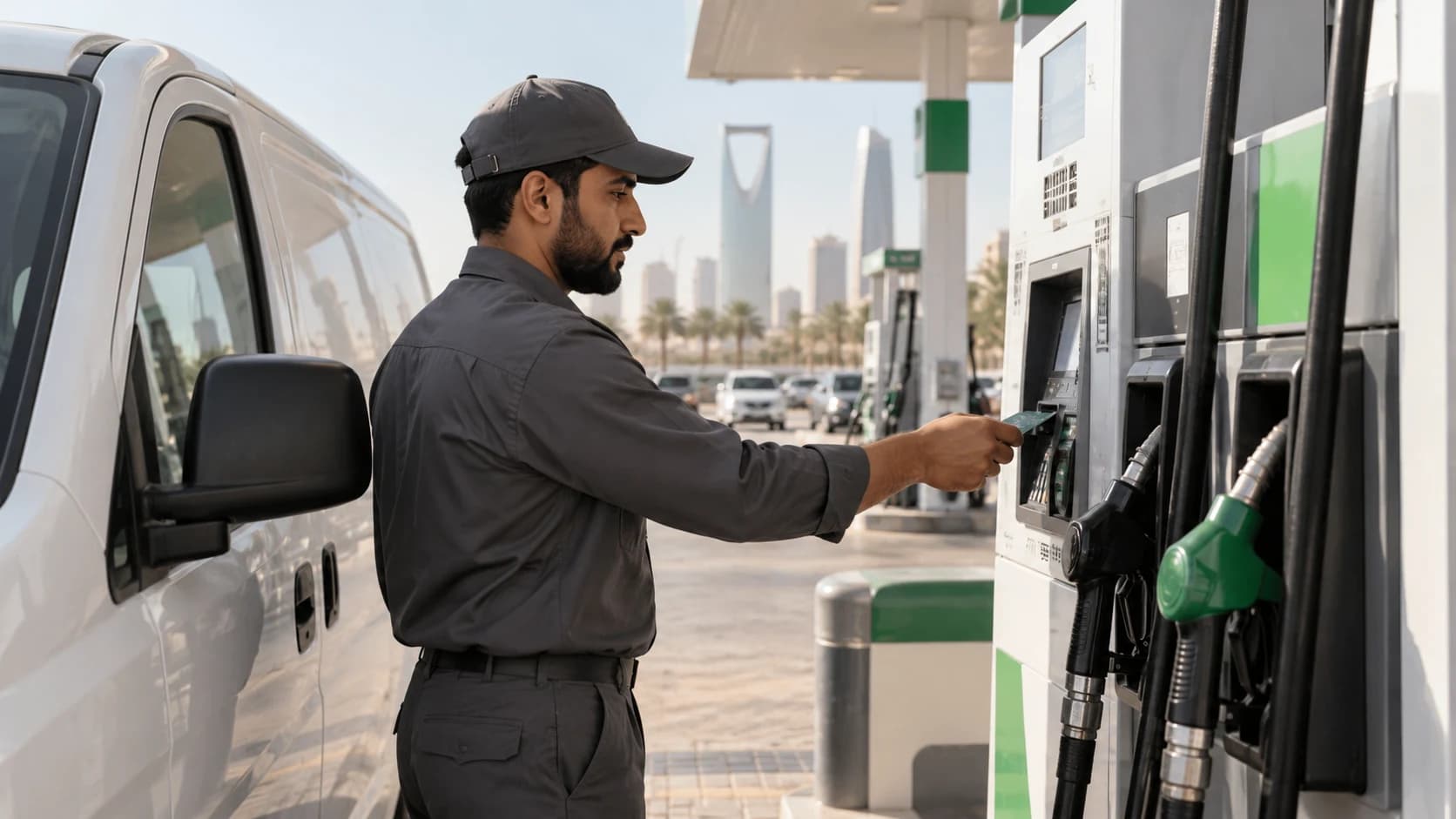
Where provider data and compatible sensors are available, compare time, location and quantity and let a manager review the difference.
- Use the provider transaction where connected.
- Compare time, location and measured quantity.
- Leave the conclusion to a documented review.
Patterns
Review repeated differences before deciding why they happened.
Group findings by vehicle and time, check the sensor and supporting journey, then document the outcome.
- Group discrepancies by vehicle and time.
- Check repeated variance and sensor quality.
- Export the underlying evidence for review.

Related capabilities
Fuel transactions
Every fill-up logged, by card, receipt or pump.
Fuel loss alerts
A drop in level that no journey explains, raised while it still matters.
Consumption
Litres per hundred kilometres, per vehicle, per route, per driver.
Geofenced stations
Confirm the fuel went into your vehicle, at the station it claims.
Cost per kilometre
Fuel, maintenance, tyres and depreciation on one line.
Asset economics / TCO
Full lifetime cost and revenue per vehicle — with a replace-or-keep signal.
Showing all 7 capabilities.
Related reading
- Guide
Fleet management in Saudi Arabia, made simple.
What a Saudi fleet needs to manage — regulations, paperwork, fuel, and people — and where a system can help.
Guide - Guide

Wasl, made simple.
What Wasl registration is, who needs it, what the Transport General Authority requires, and what it means for fleet operators day to day.
Guide - Calculator
Estimate what your fleet could save.
Start with an illustrative 10-vehicle example. Replace the fuel, repair and repeat-work inputs with your own to explore operating savings and hours returned.
Calculator
Frequently asked questions
A fleet protected, visible, compliant, and profitable.
Tell us what you run and where, and we will show you the platform against your own operation rather than a demo fleet.