Loading
Maintenance
Plan service around use, then account for the repair.
From a due service or reported defect to a closed work order.
Bring distance, engine hours where available, inspections, parts and workshop spend into the same vehicle history so the next maintenance decision has context.
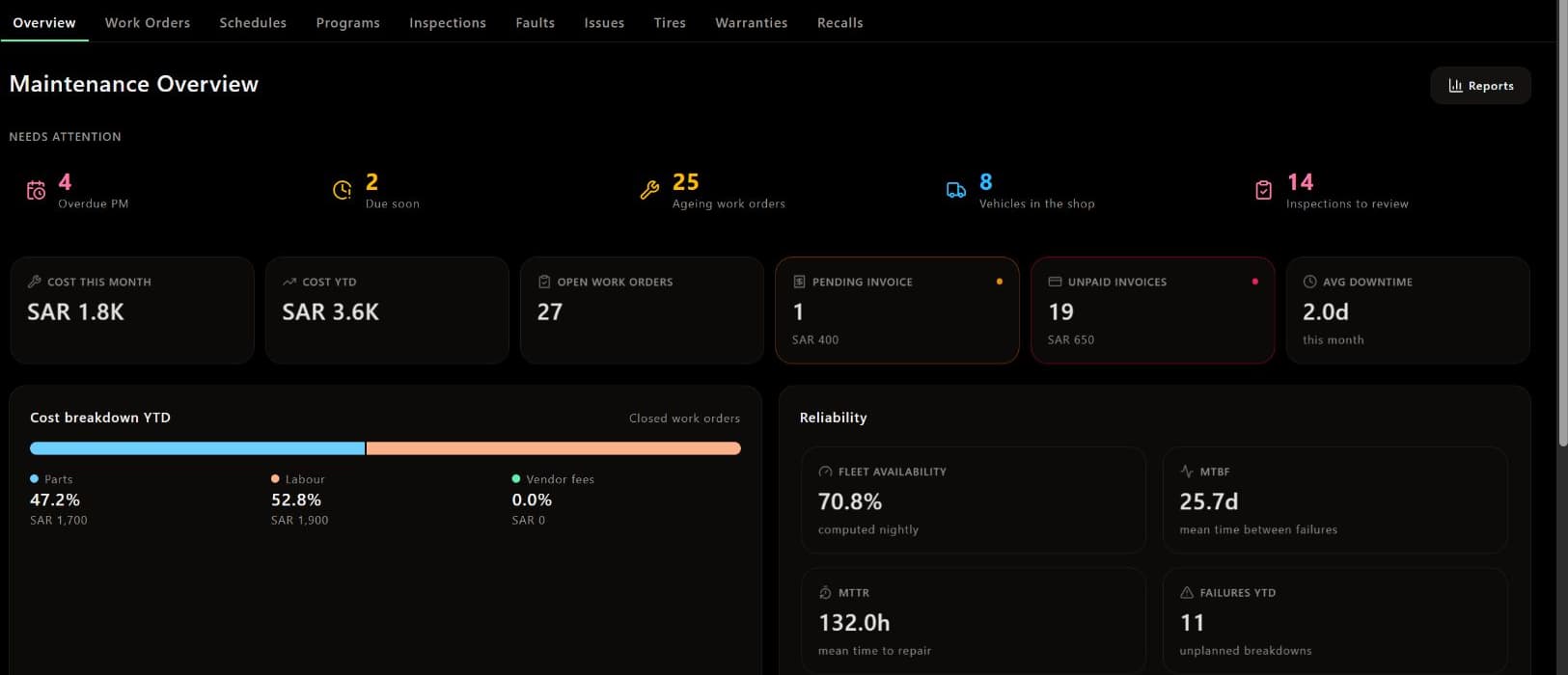
The schedule and the workshop should share the same facts.
Schedules
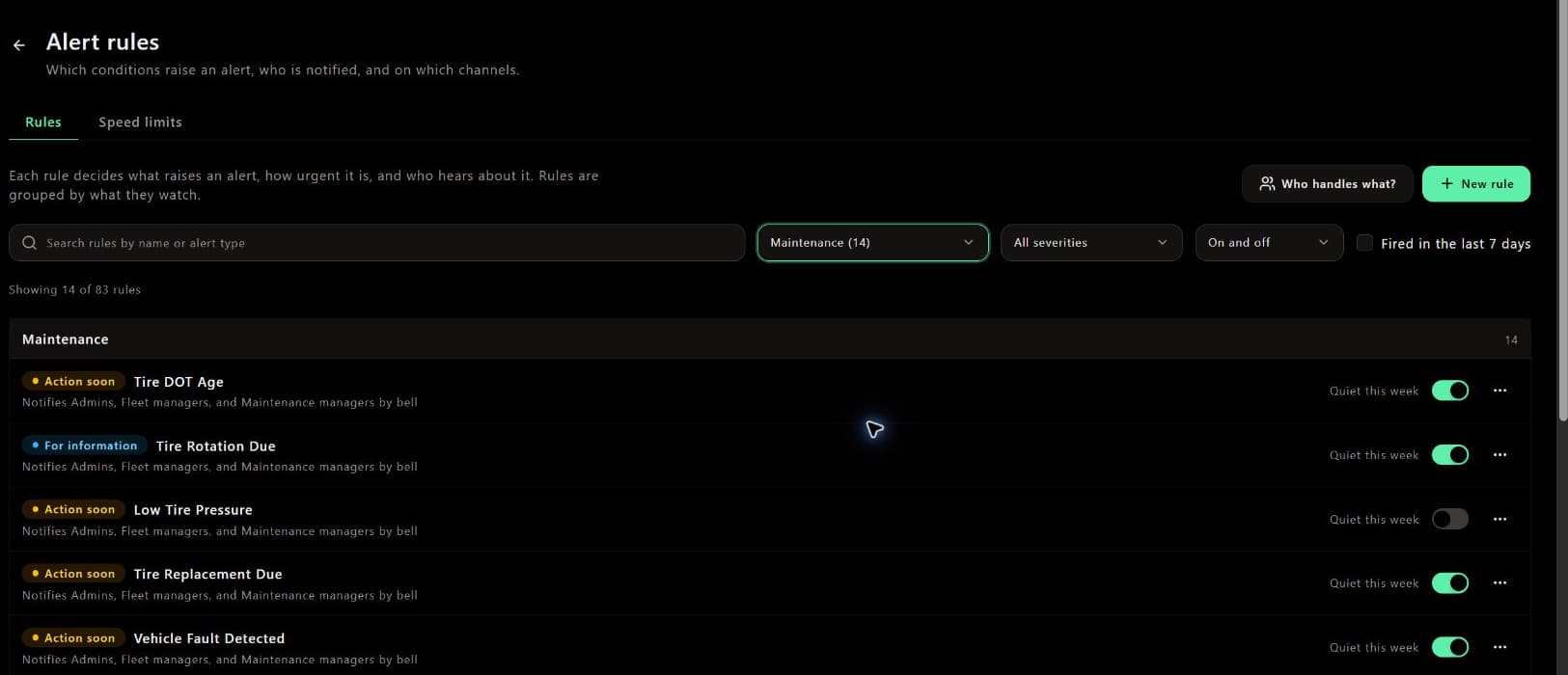
Set the service trigger that fits the vehicle.
Different vehicles work in different ways. Schedules can use distance, engine hours, and time together, with service due when the first limit is reached.
- Odometer, engine hours, and date considered together.
- Due, overdue, and upcoming services by branch.
- Hijri or Gregorian dates based on the user's language.
Fault codes
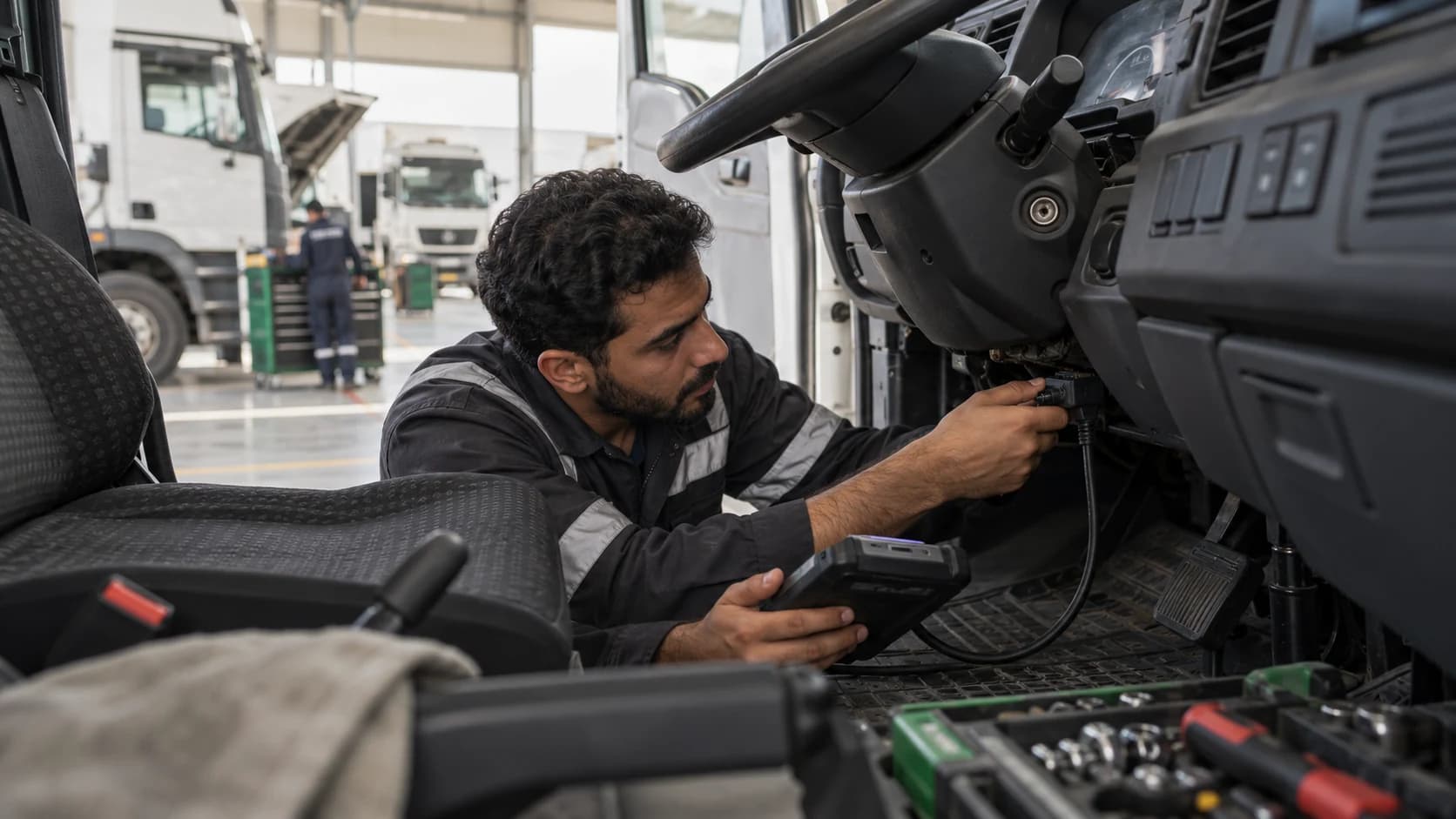
Put a fault in front of the workshop.
Diagnostic codes come from the vehicle, are interpreted, and can create a work order without re-entering the vehicle details.
- Vehicle fault codes read and interpreted.
- Issues sent to the right person.
- Fault codes can create work orders.
Work orders
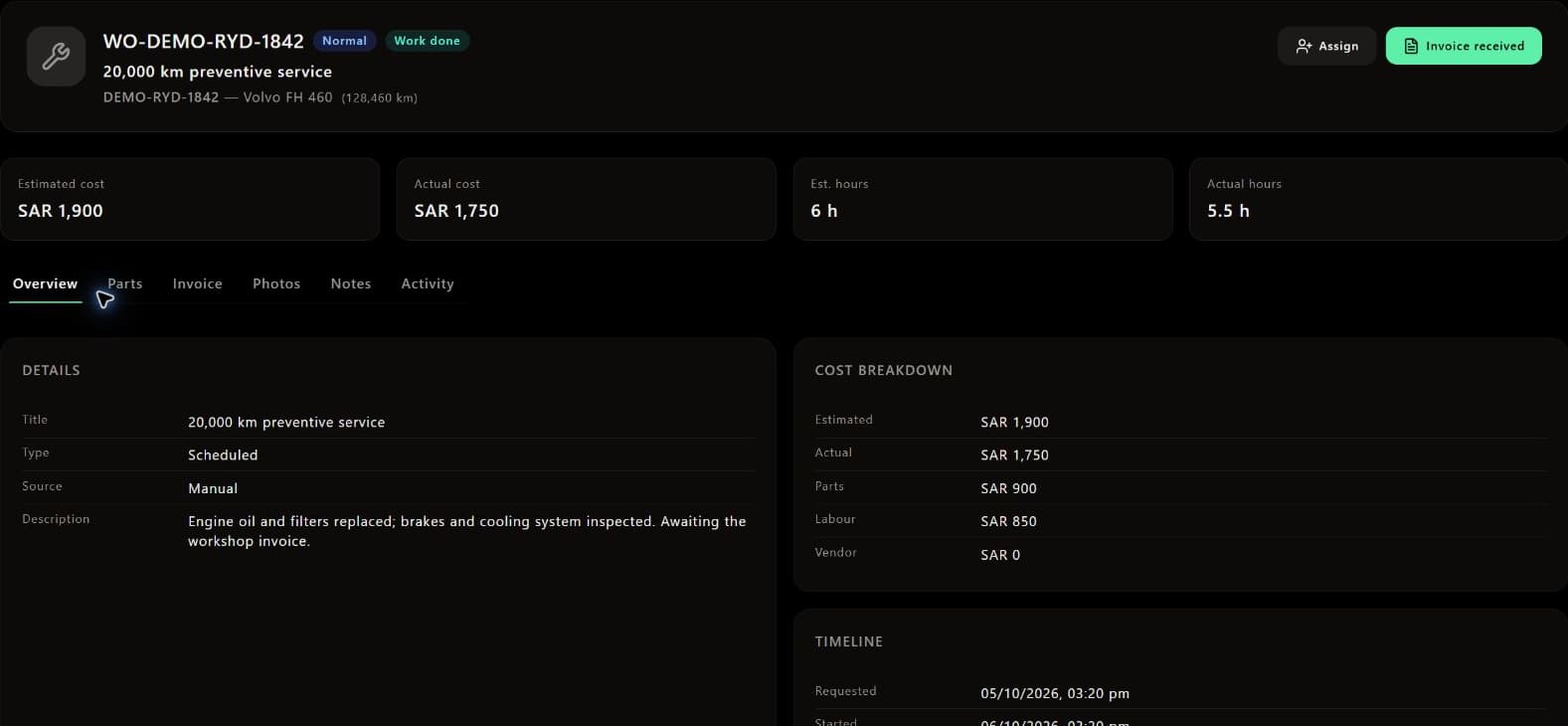
Follow a repair from request to cost.
Track internal and external repairs with labour, parts, and vendor costs on the same vehicle record.
- Internal and external work in one record.
- Labour, parts, and vendor invoices linked to the vehicle.
- Vehicle downtime tracked.
Parts and tyres
Know which parts went onto which vehicle.
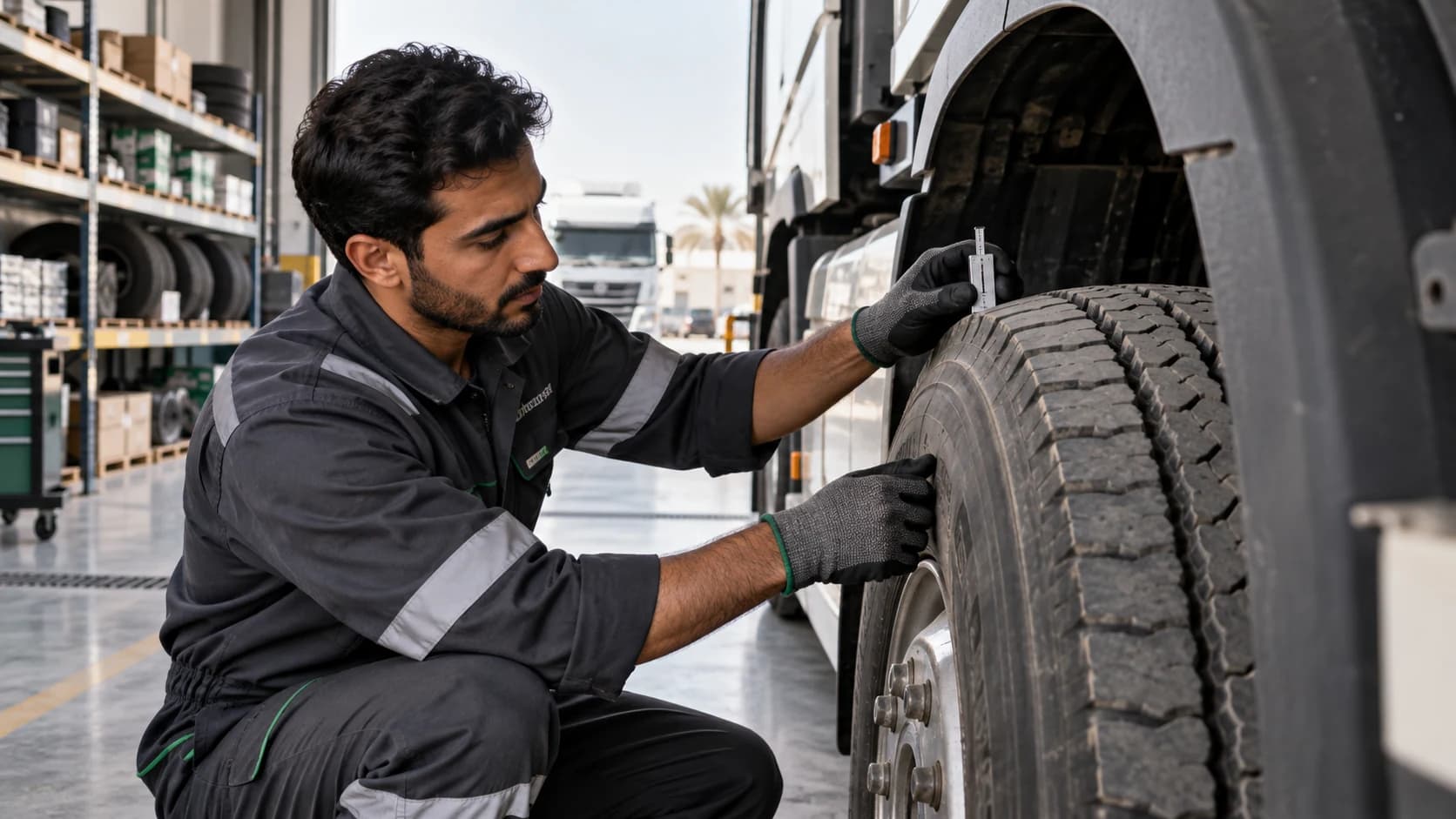
See what is in stock, what it costs, and where it was used. Tyres can be tracked by position, wear, pressure, and rotation.
- Parts stock and cost tracked as used.
- Tyres tracked by axle position and wear.
- Compare vendors based on actual costs.
Everything in maintenance
Service schedules
By distance, by engine hours or by date — whichever comes first.
Work orders
What was done to a vehicle, by whom, at what cost.
Parts and stock
What is on the shelf, what it cost, and what it went on.
Tyres
Position by position, with tread, pressure and rotation history.
Workshops and vendors
Internal bay or external garage, priced and compared.
Downtime
How long a vehicle was off the road, and what took it there.
Showing all 12 capabilities.
Every 10s
Position and engine data from each connected vehicle
In-Kingdom
Hosted on infrastructure we operate, isolated per workspace
AR · EN
Full right-to-left interface, Hijri dates, SAR with 15% VAT
Related reading
- Guide
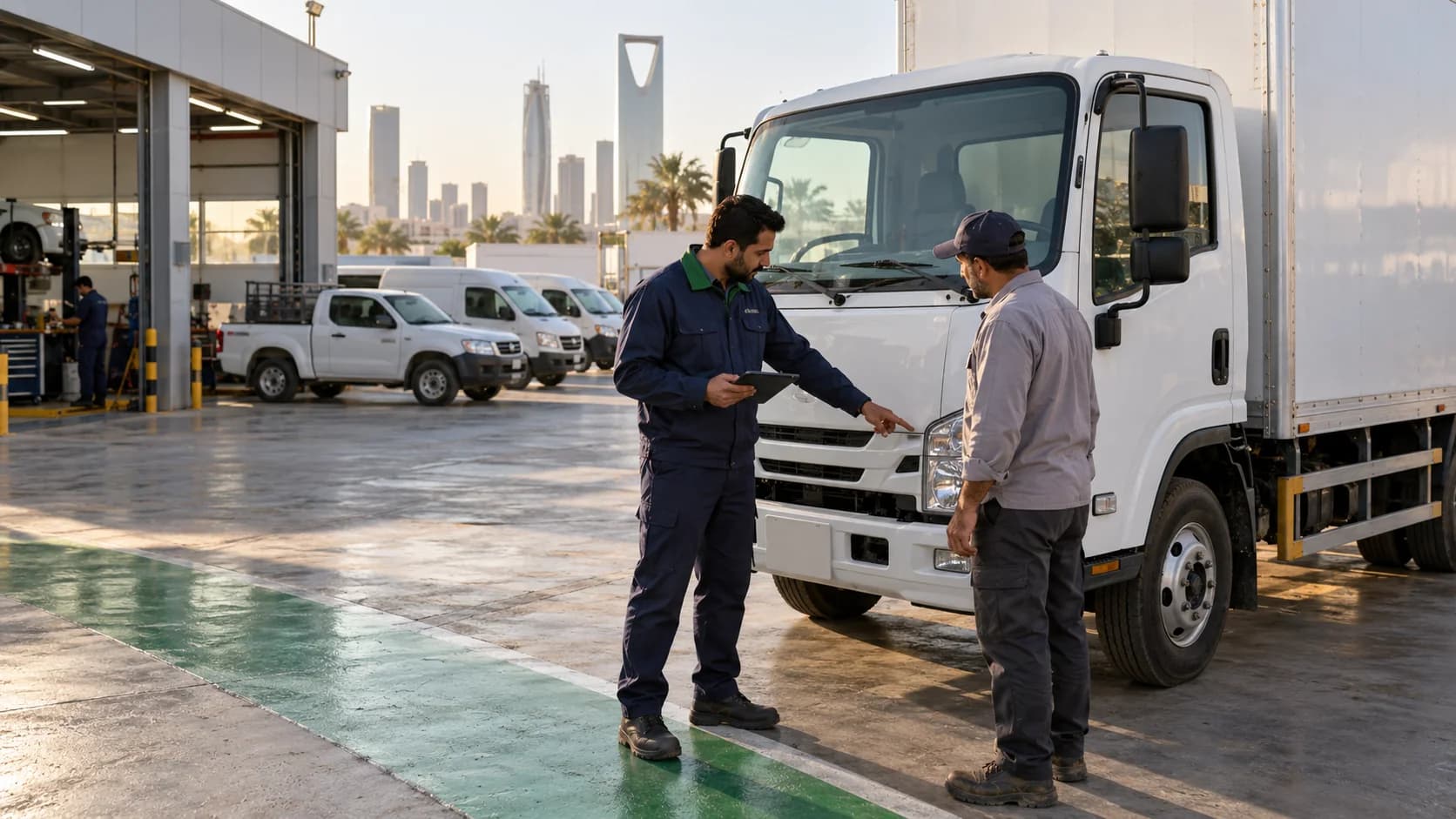
Fleet management in Saudi Arabia, made simple.
What a Saudi fleet needs to manage — regulations, paperwork, fuel, and people — and where a system can help.
Guide - Guide

Wasl, made simple.
What Wasl registration is, who needs it, what the Transport General Authority requires, and what it means for fleet operators day to day.
Guide - Calculator

Estimate what your fleet could save.
Start with an illustrative 10-vehicle example. Replace the fuel, repair and repeat-work inputs with your own to explore operating savings and hours returned.
Calculator
Frequently asked questions
A fleet protected, visible, compliant, and profitable.
Tell us what you run and where, and we will show you the platform against your own operation rather than a demo fleet.