Loading
Telematics
Let vehicle data inform the next action.
Distance, hours, faults and fuel readings where supported.
Bring available vehicle readings into the operational record so maintenance and cost decisions rely on more than manual entries. Data varies by make, model and device.
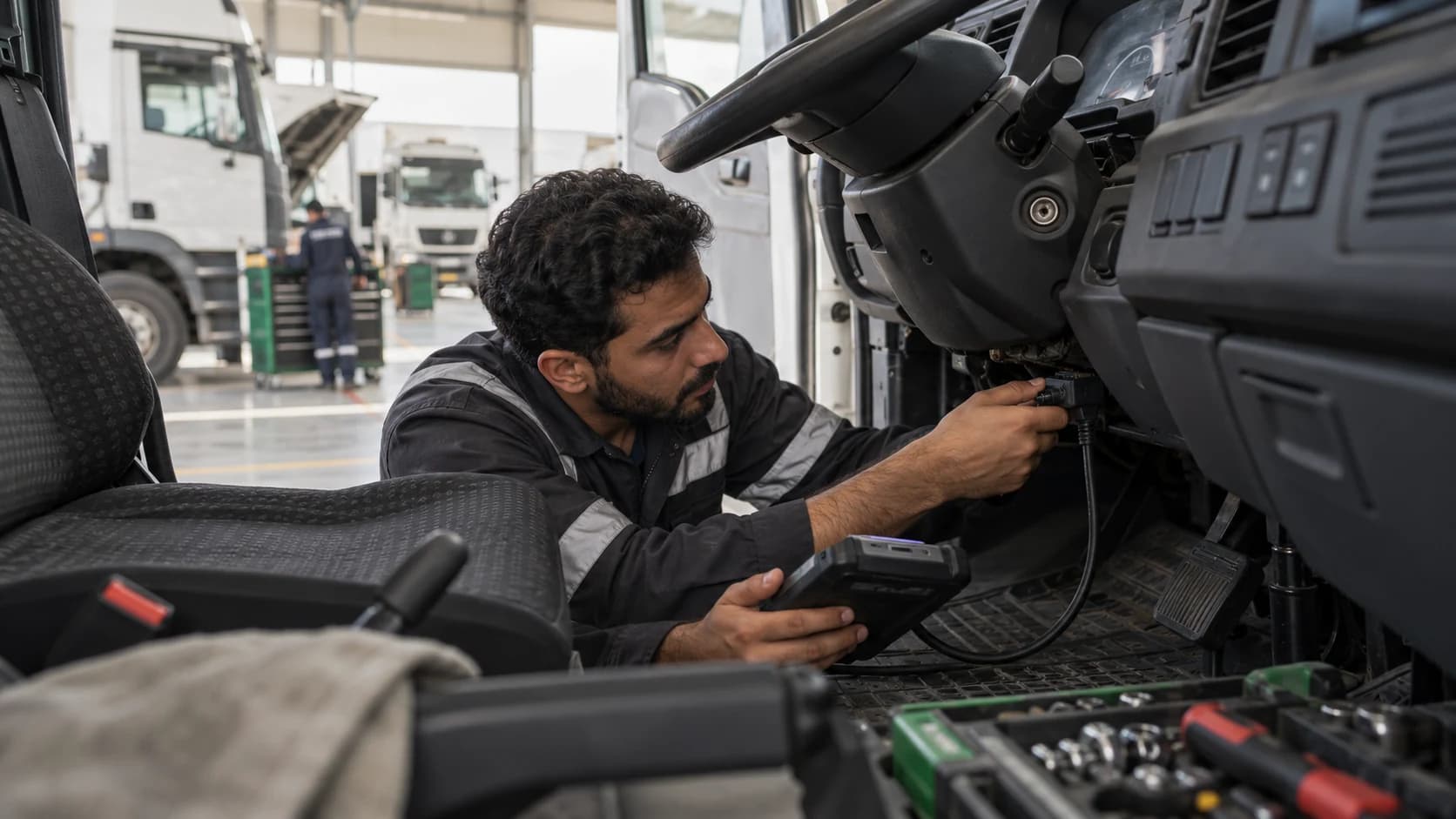
Mixed fleets rarely report the same data in the same way.
Engine data
Use the readings the vehicle can provide.
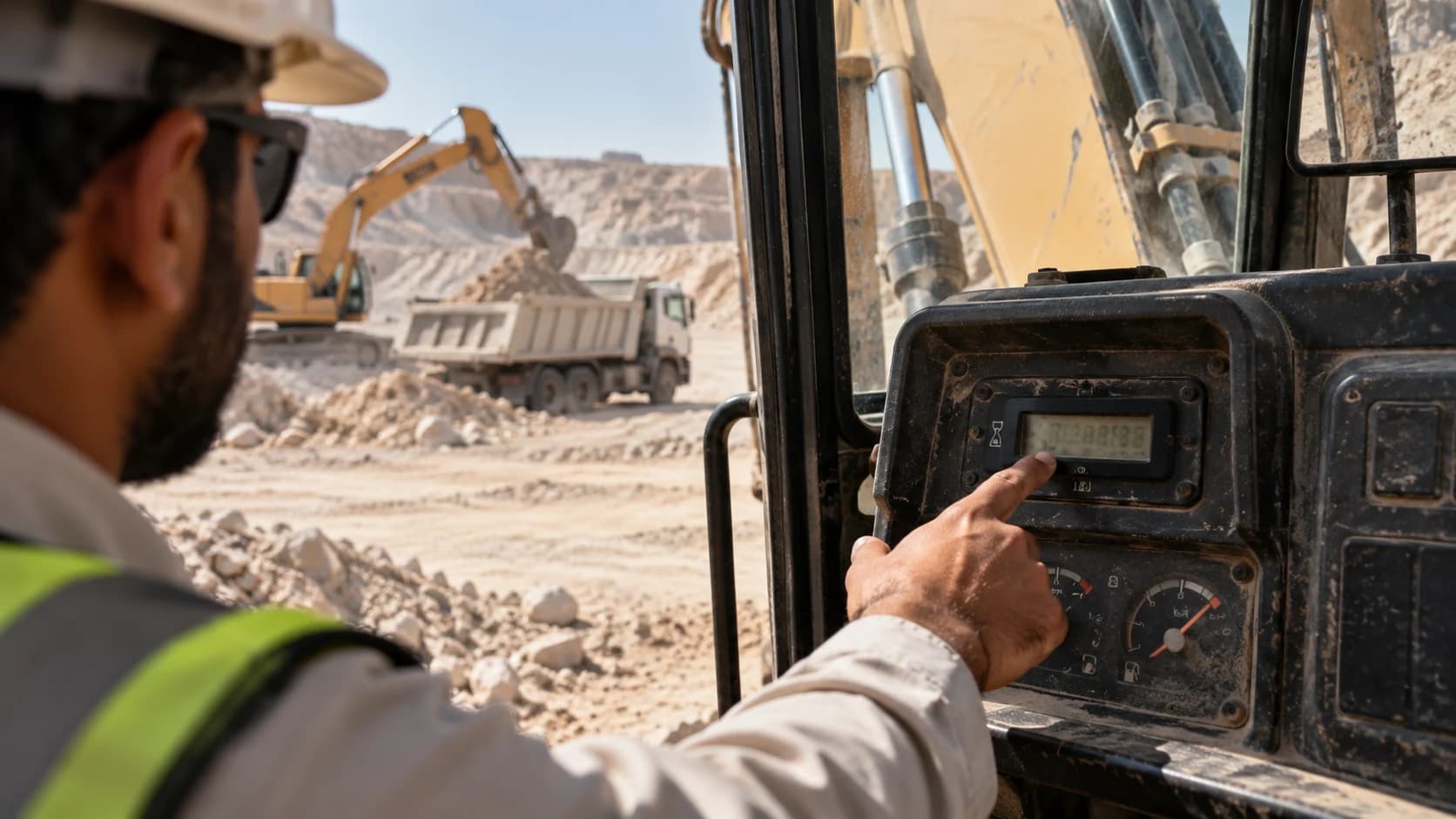
Read odometer, fuel level, coolant temperature, RPM and battery information from the vehicle itself.
- Read odometer and fuel level from the vehicle.
- Track engine hours as well as distance.
- Monitor battery and coolant condition.
Faults
Make a diagnostic code actionable.
A fault code alone does not tell your team much. We help show what it means, how serious it is and whether it needs action.
- Turn fault codes into clear information.
- Route faults based on their severity.
- Create a work order when needed.
Mixed fleets
Compare mixed vehicles with clear data sources.
Vehicle readings are standardised across different makes and model years, making fleet-wide reports easier to understand and compare.
- Standardise data across makes and model years.
- Use one reporting format across the fleet.
- Add new vehicle types without changing your reports.

Related capabilities
Engine data
Odometer, fuel level, coolant and RPM read from the vehicle itself.
Fault codes
The vehicle's own diagnostic codes, translated into what to do about them.
Engine hours
Real running hours, which is what servicing and plant billing should follow.
Tank level
What is actually in the tank, sampled continuously rather than at the pump.
Temperature
Chilled and frozen compartments logged against the load they carried.
Door sensors
When a cargo door opened, where it was, and who was assigned.
Showing all 6 capabilities.
Related reading
- Guide
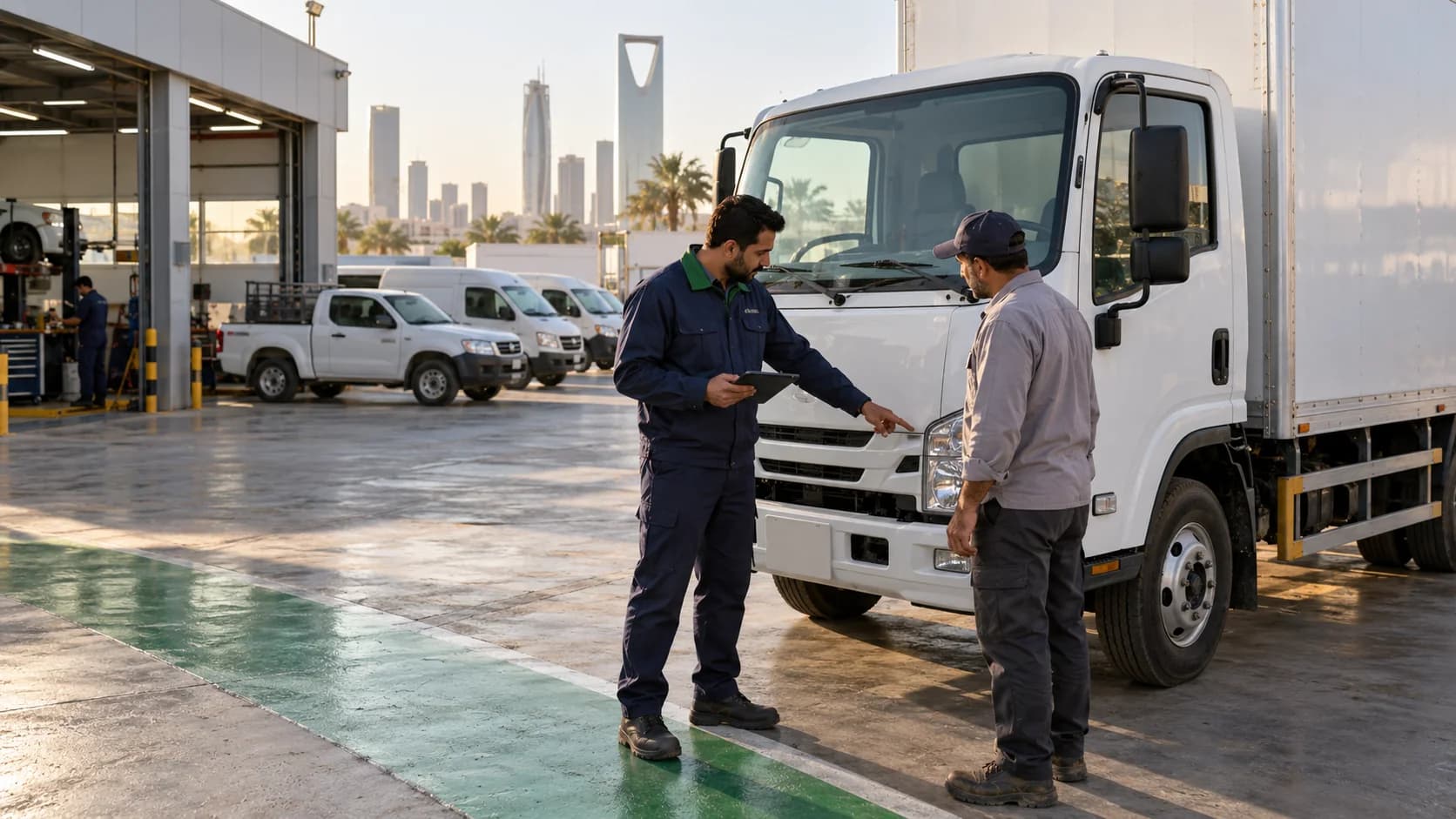
Fleet management in Saudi Arabia, made simple.
What a Saudi fleet needs to manage — regulations, paperwork, fuel, and people — and where a system can help.
Guide - Guide

Wasl, made simple.
What Wasl registration is, who needs it, what the Transport General Authority requires, and what it means for fleet operators day to day.
Guide - Calculator

Estimate what your fleet could save.
Start with an illustrative 10-vehicle example. Replace the fuel, repair and repeat-work inputs with your own to explore operating savings and hours returned.
Calculator
Frequently asked questions
A fleet protected, visible, compliant, and profitable.
Tell us what you run and where, and we will show you the platform against your own operation rather than a demo fleet.